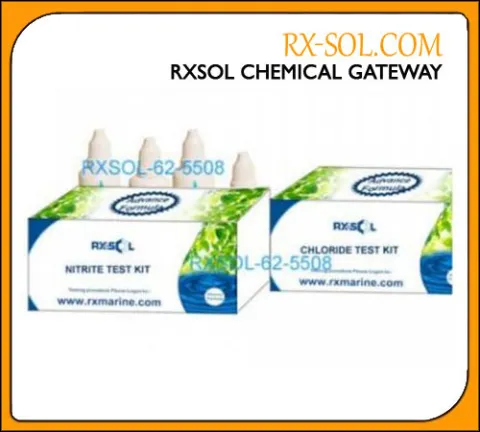
Calcium Test Kit
- Part number
- RXSOL-62-5536-001
- Category
- Test Kit For Water
- Brand
- RXSOL
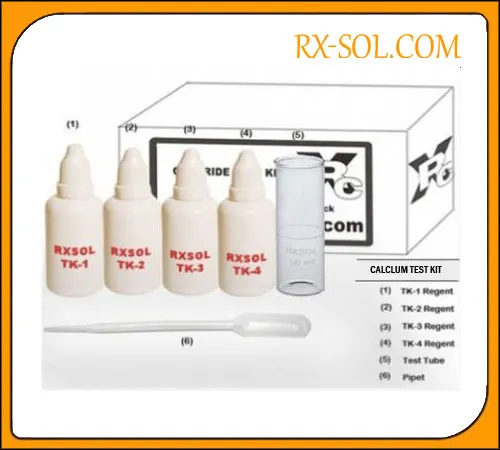
Overview
Calcium Test Kit is helpfull to determine calcium level in Boiler, Cooling, Aquarium Water. Very simple to use can be handle by simple colour determination test
For Example
Calcium is one of the most important elements in a reef aquarium. Reef invertebrates such as corals, crustaceans, mollusks and even some types of encrusting algae need calcium to grow and remain healthy. Over time, calcium levels drop as invertebrates use calcium in aquarium water. This kit allows you to easily and accurately measure calcium levels and maintain a healthy reef aquarium. Measures calcium levels as low as 20mg/L. Uses titration method, with easy to see color change for precise measurement. For use in reef aquariums
Applications
Dosage and directions
Features of this Assay:
Quick & Easy to use
Stable and suitable for high-throughput testing
No toxic substances
Safety and SDS
Read the safety data sheet before handling. Wear suitable gloves and eye protection.
View safety data sheet
| Product Name |
Calcium Test Kit |
| Product Type | RXSOL-62-5536-001 |
Company Details:
RX MARINE INTERNATIONAL
105, A wing , BSEL , TECH PARK.
VASHI ,NEW BOMBAY 400703 INDIA
| Phone | +91 22 65113333/ 5555 / 9999 / 27611360 / 27815540 |
| Fax | +91 22 2781 1318 :::AOH :0091 9322594669 |
| rxsolchemicals@gmail.com |
Substances:
See section below for composition of Mixtures :
| CAS No | %[weight] | Name |
| 1310-73-2 | <10 | sodium hydroxide |
| Min | Max | |
| Flammability | 0 | |
| Toxicity | 2 | |
| Body Contact | 4 | |
| Reactivity | 0 | |
| Chronic | 2 |
| GHS Classification[1] | Metal Corrosion Category 1, Skin Corrosion/Irritation Category 1A, Serious Eye Damage Category 1 |
| Legend: | 1. Classified by Chemwatch; 2. Classification drawn from EC Directive 67/548/EEC - Annex I ; 3. Classification drawn from EC Directive 1272/2008 - Annex VI |
GHS label elements:
SIGNAL WORD DANGER:
Hazard statement(s):
| H290 | May be corrosive to metals |
| H314 | Causes severe skin burns and eye damage |
| H318 | Causes serious eye damage |
Precautionary statement(s): Prevention:
| P260 | Do not breathe dust/fume/gas/mist/vapours/spray. |
| P280 | Wear protective gloves/protective clothing/eye protection/face protection. |
| P234 | Keep only in original container. |
Precautionary statement(s): Response:
| P301+P330+P331 | IF SWALLOWED: Rinse mouth. Do NOT induce vomiting. |
| P303+P361+P353 | IF ON SKIN (or hair): Take off immediately all contaminated clothing. Rinse skin with water/shower. |
| P305+P351+P338 | IF IN EYES: Rinse cautiously with water for several minutes. Remove contact lenses, if present and easy to do. Continue rinsing. |
| P310 | Immediately call a POISON CENTER/doctor/physician/first aider |
| P321 | Specific treatment (see advice on this label). |
| P363 | Wash contaminated clothing before reuse. |
| P390 | Absorb spillage to prevent material damage. |
| P304+p340 | IF INHALED: Remove person to fresh air and keep comfortable for breathing. |
Precautionary statement(s):
Storage
| P405 | Store locked up. |
Precautionary statement(s):
Disposal
| P501 | Dispose of contents/container to authorised chemical landfill or if organic to high temperature incineration |
| Eye Contact |
If this product comes in contact with the eyes:Immediately hold eyelids apart and flush the eye continuously with running water.Ensure complete irrigation of the eye by keeping eyelids apart and away from eye and moving the eyelids by occasionally lifting the upper and lower lids. Continue flushing until advised to stop by the Poisons Information Centre or a doctor, or for at least 15 minutes. Transport to hospital or doctor without delay.Removal of contact lenses after an eye injury should only be undertaken by skilled personnel. |
| Skin Contact | If skin or hair contact occurs:Immediately flush body and clothes with large amounts of water, using safety shower if available.Quickly remove all contaminated clothing, including footwear.Wash skin and hair with running water. Continue flushing with water until advised to stop by the Poisons Information Centre.Transport to hospital, or doctor. |
| Inhalation | If fumes or combustion products are inhaled remove from contaminated area.Lay patient down. Keep warm and rested.Prostheses such as false teeth, which may block airway, should be removed, where possible, prior to initiating first aid procedures.Apply artificial respiration if not breathing, preferably with a demand valve resuscitator, bag-valve mask device, or pocket mask as trained.Perform CPR if necessary.Transport to hospital, or doctor, without delay. |
| Ingestion | For advice, contact a Poisons Information Centre or a doctor at once.Urgent hospital treatment is likely to be needed.If swallowed do NOT induce vomiting.If vomiting occurs, lean patient forward or place on left side (head-down position, if possible) to maintain open airway and prevent aspiration.Observe the patient carefully.Never give liquid to a person showing signs of being sleepy or with reduced awareness; i.e. becoming unconscious.Give water to rinse out mouth, then provide liquid slowly and as much as casualty can comfortably drink.Transport to hospital or doctor without delay. |
Indication of any immediate medical attention and special treatment needed:
For acute or short-term repeated exposures to highly alkaline materials:
|
Respiratory stress is uncommon but present occasionally because of soft tissue edema.Unless endotracheal intubation can be accomplished under direct vision, cricothyroidotomy or tracheotomy may be necessary. Oxygen is given as indicated. The presence of shock suggests perforation and mandates an intravenous line and fluid administration.Damage due to alkaline corrosives occurs by liquefaction necrosis whereby the saponification of fats and solubilisation of proteins allow deep penetration into the tissue. Alkalis continue to cause damage after exposure. |
INGESTION:
Milk and water are the preferred diluents
No more than 2 glasses of water should be given to an adult.
|
Neutralising agents should never be given since exothermic heat reaction may compound injury. * Catharsis and emesis are absolutely contra-indicated. * Activated charcoal does not absorb alkali. * Gastric lavage should not be used. Supportive care involves the following: Withhold oral feedings initially. If endoscopy confirms transmucosal injury start steroids only within the first 48 hours. Carefully evaluate the amount of tissue necrosis before assessing the need for surgical intervention. Patients should be instructed to seek medical attention whenever they develop difficulty in swallowing (dysphagia). |
SKIN AND EYE:
Injury should be irrigated for 20-30 minutes.
Eye injuries require saline. [Ellenhorn & Barceloux: Medical Toxicology]
Extinguishing media:
Water spray or fog.
Foam.
Dry chemical powder.
BCF (where regulations permit).
Special hazards arising from the substrate or mixture:
Fire Incompatibility:
None known.
Advice for firefighters:
Fire Fighting:
Alert Fire Brigade and tell them location and nature of hazard.
Wear full body protective clothing with breathing apparatus.
Prevent, by any means available, spillage from entering drains or water course.
Use fire fighting procedures suitable for surrounding area.
Fire/Explosion Hazardea.:
Non combustible.
Not considered a significant fire risk, however containers may burn.
Decomposition may produce toxic fumes of:
Personal precautions, protective equipment and emergency procedures:
| Minor Spills |
Clean up all spills immediately. Avoid breathing vapours and contact with skin and eyes. Control personal contact with the substance, by using protective equipment.Contain and absorb spill with sand, earth, inert material or vermiculite. |
| Major Spills |
Clear area of personnel and move upwind. Alert Fire Brigade and tell them location and nature of hazard. Wear full body protective clothing with breathing apparatus. Prevent, by any means available, spillage from entering drains or water course. |
| Personal Protective Equipment advice is contained in Section 8 of the MSDS. |
Precautions for safe handling:
| Safe handling |
Avoid all personal contact, including inhalation. Wear protective clothing when risk of exposure occurs. Use in a well-ventilated area. WARNING: |
| Other information |
Store in original containers. Keep containers securely sealed. Store in a cool, dry, well-ventilated area. Store away from incompatible materials and foodstuff containers. |
Conditions for safe storage, including any incompatibilities:
| Suitable container |
Lined metal can, lined metal pail/ can. Plastic pail. Polyliner drum. Packing as recommended by manufacturer. |
| Storage incompatibility | Avoid strong acids, acid chlorides, acid anhydrides and chloroformates. |
PACKAGE MATERIAL INCOMPATIBILITIES:
Control parameters
OCCUPATIONAL EXPOSURE LIMITS (OEL)
INGREDIENT DATA:
| Source | Ingredient | Material name | TWA | STEL | Peak | Peak | Notes |
| US ACGIH Threshold Limit Values (TLV) | sodium hydroxide | sodium hydroxide | Not Available | Not Available | 2 (mg/m3) | 2 (mg/m3) |
TLV® Basis: URT, eye, & skin irr |
|
US OSHA Permissible Exposure Levels (PELs) - Table Z1 |
sodium hydroxide | sodium hydroxide | 2 (mg/m3) |
Not Available |
Not Available |
Not Available |
Not Available |
|
US NIOSH Recommended Exposure Limits (RELs) |
sodium hydroxide | Caustic soda, Lye, Soda lye, Sodium hydrate | Not Available |
Not Available |
2 (mg/m3) | 2 (mg/m3) |
Not Available |
EMERGENCY LIMITS:
| Ingredient | TEEL-0 | TEEL-1 | TEEL-2 | TEEL-3 |
| sodium hydroxide | 0.5(ppm) | 0.5(ppm) | 0.5(ppm) | 0.5(ppm) |
Exposure controls:
| Appropriate engineering controls |
Engineering controls are used to remove a hazard or place a barrier between the worker and the hazard. Well-designed engineering controls can be highly effective in protecting workers and will typically be independent of worker interactions to provide this high level of protection. The basic types of engineering controls are: Process controls which involve changing the way a job activity or process is done to reduce the risk. |
| Personal protection | |
| Eye and face protection | Safety glasses with unperforated side shields may be used where continuous eye protection is desirable, as in laboratories; spectacles are not sufficient where complete eye protection is needed such as when handling bulk-quantities, where there is a danger of splashing, or if the material may be under pressure Chemical goggles.whenever there is a danger of the material coming in contact with the eyes; goggles must be properly fitted Full face shield (20 cm, 8 in minimum) may be required for supplementary but never for primary protection of eyes; these afford face protection.Alternatively a gas mask may replace splash goggles and face shields. |
| Skin protection | See Hand protection below |
| Hand protection |
Elbow length PVC gloves When handling corrosive liquids, wear trousers or overalls outside of boots, to avoid spills entering boots. |
| Body protection | See Other protection below |
| Other protection |
Overalls. PVC Apron. PVC protective suit may be required if exposure severe. Eyewash unit. |
| Thermal hazards |
| Recommended material(s) | Respiratory protection |
| GLOVE SELECTION INDEX | Not Applicable |
Glove selection is based on a modified presentation of the:
"Forsberg Clothing Performance Index".
The effect(s) of the following substance(s) are taken into account in the
Calcium Test Solution #1
| Material | CPI |
| BUTYL | A |
| NAT+NEOPR+NITRILE | A |
| NATURAL RUBBER | A |
| NATURAL+NEOPRENE | A |
| NATURAL+NEOPRENE | A |
| NATURAL+NEOPRENE | A |
| NITRILE | A |
| NITRILE+PVC | A |
| PE | A |
| PE/EVAL/PE | A |
| PVC | A |
| SARANEX-23 | A |
| SARANEX-23 2-PLY | A |
| TEFLON | A |
| VITON/CHLOROBUTYL | A |
* CPI - Chemwatch Performance Index
A: Best Selection
B: Satisfactory; may degrade after 4 hours continuous immersion
C: Poor to Dangerous Choice for other than short term immersion
| Appearance Clear | Clear strongly alkaline liquid with no odour; mixes with water. |
| Physical state | Liquid |
| Odour | Not Available |
| Odour threshold | Not Available |
| pH (as supplied) | 13.3 |
| Melting point / freezing point (°C) | Not Available |
| Initial boiling point and boiling range (°C) | Not Available |
| Flash point (°C) | Not Available |
| Evaporation rate | Not Available |
| Flammability | Not Available |
| Upper Explosive Limit (%) | Not Applicable |
| Lower Explosive Limit (%) | Not Applicable |
| Vapour pressure (kPa) | Not Available |
| Solubility in water (g/L) | Miscible |
| Vapour density (Air = 1) | Not Available |
| Relative density (Water = 1) | 1.096 |
| Partition coefficient n-octanol / water | Not Available |
| Auto-ignition temperature (°C) | Not Available |
| Decomposition temperature | Not Available |
| Viscosity (cSt) | Not Available |
| Molecular weight (g/mol) | Not Applicable |
| Taste | Not Available |
| Explosive properties | Not Available |
| Oxidising properties | Not Available |
| Surface Tension (dyn/cm or mN/m) | Not Available |
| Volatile Component (%vol) | Not Available |
| Gas group | Not Available |
| pH as a solution(1%) | Not Available |
| VOC g/L | Not Available |
| Reactivity | See section 7 |
| Chemical stability |
Presence of incompatible materials. Product is considered stable. Hazardous polymerisation will not occur. |
| Possibility of hazardous reactions | See section 7 |
| Conditions to avoid | See section 7 |
| Incompatible materials | See section 7 |
| Hazardous decomposition products | See section 5 |
| Inhaled | Inhalation of alkaline corrosives may produce irritation of the respiratory tract with coughing, choking, pain and mucous membrane damage.Pulmonary oedema may develop in more severe cases; this may be immediate or in most cases following a latent period of 5-72 hours. Symptoms may include a tightness in the chest, dyspnoea, frothy sputum, cyanosis and dizziness. Findings may include hypotension, a weak and rapid pulse and moist rales. |
| Ingestion |
Ingestion of alkaline corrosives may produce immediate pain, and circumoral burns. Mucous membrane corrosive damage is characterised by a white appearance and soapy feel; this may then become brown, oedematous and ulcerated. Profuse salivation with an inability to swallow or speak may also result. Even where there is limited or no evidence of chemical burns, both the oesophagus and stomach may experience a burning pain; vomiting and diarrhoea may follow. |
| Skin Contact | The material can produce severe chemical burns following direct contact with the skin.Skin contact with alkaline corrosives may produce severe pain and burns; brownish stains may develop. The corroded area may be soft, gelatinous and necrotic; tissue destruction may be deep.Entry into the blood-stream through, for example, cuts, abrasions, puncture wounds or lesions, may produce systemic injury with harmful effects. |
| Eye | When applied to the eye(s) of animals, the material produces severe ocular lesions which are present twenty-four hours or more after instillation.Direct contact with alkaline corrosives may produce pain and burns. Oedema, destruction of the epithelium, corneal opacification and iritis may occur. In less severe cases these symptoms tend to resolve. |
| Chronic | Repeated or prolonged exposure to corrosives may result in the erosion of teeth, inflammatory and ulcerative changes in the mouth and necrosis (rarely) of the jaw. Bronchial irritation, with cough, and frequent attacks of bronchial pneumonia may ensue. Gastrointestinal disturbances may also occur. Chronic exposures may result in dermatitis and/or conjunctivitis. |
| TOXICITY | IRRITATION | |
| Calcium Test Solution #1 | Not Available | Not Available |
| sodium hydroxide | Not Available |
Eye (rabbit): 0.05 mg/24h SEVERE Eye (rabbit):1 mg/24h SEVERE Eye (rabbit):1 mg/30s rinsed-SEVERE Skin (rabbit): 500 mg/24h SEVERE Not Available |
| Acute Toxicity | Not Applicable |
| Skin Irritation/Corrosion | Skin Corrosion/Irritation Category 1A |
| Serious Eye Damage/Irritation | Serious Eye Damage Category 1 |
| Respiratory or Skin sensitisation | Not Applicable |
| Mutagenicity | Not Applicable |
| Carcinogenicity | Not Applicable |
| Reproductivity | Not Applicable |
| STOT - Single Exposure | Not Applicable |
| STOT - Repeated Exposure | Not Applicable |
| Aspiration Hazard | Not Applicable |
CMR STATUS:
| RESPIRATORY | sodium hydroxide | US - California OEHHA/ARB - Acute Reference Exposure Levels and Target Organs (RELs) - Respiratory | X |
| SKIN | sodium hydroxide | US - California OEHHA/ARB - Acute Reference Exposure Levels and Target Organs (RELs) - sKIN | X |
Toxicity:
NOT AVAILABLE
| Ingredient | Endpoint | Test Duration | Effect | Value | Species | BCF |
| CalciumTest Solution #1 | Not Available | Not Available | Not Available | Not Available | Not Available | Not Available |
Prevent, by any means available, spillage from entering drains or water courses.
DO NOT discharge into sewer or waterways.
Persistence and degradability:
| Ingredient | Persistence: Water/Soil | Persistence: Air |
| Not Available | Not Available | Not Available |
Bioaccumulative potential:
| Ingredient | Bioaccumulation |
| Not Available | Not Available |
Mobility in soil:
| Ingredient | Mobility |
| Not Available | Not Available |
|
Product / Packaging disposal: Recycle wherever possible.Consult manufacturer for recycling options or consult local or regional waste management authority for disposal if no suitable treatment or disposal facility can be identified.Treat and neutralise at an approved treatment plant.Treatment should involve: Neutralisation with suitable dilute acid followed by: burial in a land-fill specifically licenced to accept chemical and /or pharmaceutical wastes or Incineration in a licenced apparatus (after admixture with suitable combustible material). |
| Marine Pollutant | NO |
Land transport (DOT):
| UN number | 1824 | ||||
| Packing group | II | ||||
| UN proper shipping name | Sodium hydroxide solution | ||||
| Environmental hazard | No relevant data | ||||
| Transport hazard class(es) | Class 8 | ||||
| Special precautions for user |
|
Air transport (ICAO-IATA / DGR):
| UN number | 18 | ||||||||||||||
| Packing group | II | ||||||||||||||
| UN proper shipping name | Sodium hydroxide solution | ||||||||||||||
| Environmental hazard | No relevant data | ||||||||||||||
| Transport hazard class (es) |
|
||||||||||||||
| Special precautions for user |
|
Safety, health and environmental regulations / legislation specific for the substance or mixture:
sodium hydroxide(1310-73-2) is found on the following regulatory lists:
|
The information provided about the product on this Safety Data Sheet has been compiled from knowledge of the individual constituents The data given here is based on current knowledge and experience. This Safety Data Sheet describes the product in terms of safety requirements and does not signify any warranty with regard to the product's properties The data given here only applies when product used for proper application(s). The product is not sold as suitable for other applications usage in such may cause risks not mentioned in this sheet. Do not use for other application(s) without seeking advice from manufacturer. DISCLAIMER OF LIABILITY :The information in this SDS was obtained from sources which we believe are reliable. However, the information is provided without any warranty, express or implied, regarding its correctness. The conditions or methods of handling, storage, use or disposal of the product are beyond our control and may be beyond our knowledge. For this and other reasons, we do not assume responsibility and expressly disclaim liability for loss, damage or expense arising out of or in any way connected with the handling, storage, use or disposal of the product. This MSDS was prepared and is to be used only for this product. If the product is used as a component in another product, this MSDS information may not be applicable. |
Availability
Calcium Test Kit manufacturer supplier distributor in Mumbai, Kandla, Kolkata, Vizag, Chennai, India, Fujairah, Dubai UAE, Muscat Oman, Kenya Africa. Get the best quality of Calcium Test Kit at a competitive price from us. We have ready stock of Calcium Test Kit in India, UAE Gulf, Oman, Kenya Africa. Contact us for bulk as well as small orders.