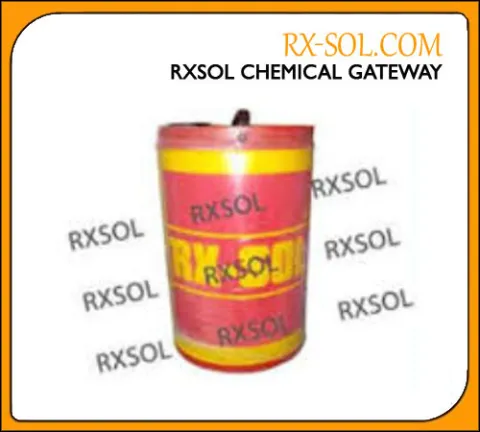
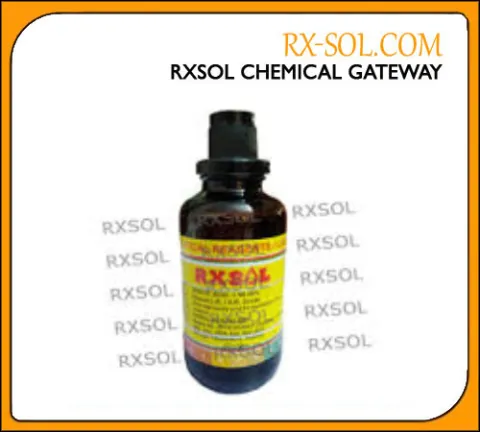
Nessler’s reagent K2 (Hg I4 ) Potassium Mercuric Iodide
- Part number
- RXSOL-60-6052-002
- Category
- Lab Chemical
- Brand
- RXSOL
Overview
Potassium Mercuric Iodide used as Nessler's reagen Cas 7783-33-7 , a 0.09 mol/L solution of potassium tetraiodomercurate(II) (K2[HgI4]) in 2.5 mol/L potassium hydroxide, used to detect ammonia.
Safety and SDS
Read the safety data sheet before handling. Wear suitable gloves and eye protection.
View safety data sheet
| Product Name | Nessler’s reagent K2 (Hg I4) |
| Part Number | RXSOL-60-6052-002 |
Company Details:
RX MARINE INTERNATIONAL
105, A wing , BSEL , TECH PARK.
VASHI ,NEW BOMBAY 400703 INDIA
Branch : Kandla, Mumbai , Chennai, Vizag, Kolkata, UAE , OMAN, CANADA KENYA
| Phone | +91 22 20871200 - 1400 |
| Fax | +91 22 27612100 :::AOH :0091 9821214367 |
| rxsolchemicals@gmail.com | |
| Website | www.rxmarine.com |
| Name of Substance | Cas Number | EC Number | Weight % |
| Caustic Potash | 1310-58-3 | 215-181-3 | >= 10 - < 20% |
| Nessler's Reagent | 7783-33-7 | 231-990-4 | >=2.5 - < 10% |
| Signal Word | Danger |
| Hazard Statements |
H290 May be corrosive to metals. H301 + H331 Toxic if swallowed or if inhaled. H310 Fatal in contact with skin. H314 Causes severe skin burns and eye damage. H373 May cause damage to organs (Kidney, Central nervous system) through prolonged or repeated exposure. H410 Very toxic to aquatic life with long lasting effects. |
| Precautionary statements - prevention |
P273 Avoid release to the environment. P280 Wear protective gloves/ protective clothing/ eye protection/ face protection/ hearing protection. P303 + P361 + P353 IF ON SKIN (or hair): Take off immediately all contaminated clothing. Rinse skin with water. P304 + P340 + P310 IF INHALED: Remove person to fresh air and keep comfortable for breathing. Immediately call a POISON CENTER/ doctor. P305 + P351 + P338 IF IN EYES: Rinse cautiously with water for several minutes. Remove contact lenses, if present and easy to do. Continue rinsing. P314 Get medical advice/ attention if you feel unwell. |
| Precautionary statements - response | Get medical attention/advice if you feel unwell |
| Other hazards | This substance/mixture contains no components considered to be either persistent, bioaccumulative and toxic (PBT), or very persistent and very bioaccumulative (vPvB) at levels of 0.1% or higher. |
| Skin Contact | In case of skin contact: Take off immediately all contaminated clothing. Rinse skin with water/ shower. Call a physician immediately. |
| Eye Contact | After eye contact: rinse out with plenty of water. Immediately call in ophthalmologist. Remove contact lenses. |
| Inhalation: | After inhalation: fresh air. Immediately call in physician. If breathing stops: immediately apply artificial respiration, if necessary also oxygen. |
| Ingestion | If swallowed: give water to drink (two glasses at most). Seek medical advice immediately. In exceptional cases only, if medical care is not available within one hour, induce vomiting (only in persons who are wide awake and fully conscious), administer activated charcoal (20 - 40 g in a 10% slurry) and consult a doctor as quickly as possible. Do not attempt to neutralise. |
| Most important symptoms/effects | symptoms and effects are described in the labelling |
| Notes to Physician | Treat symptomatically |
| Suitable extinguishing media | Use extinguishing measures that are appropriate to local circumstances and the surrounding environment. |
| Unsuitable extinguishing media | For this substance/mixture no limitations of extinguishing agents are given. |
| Specific Hazards Arising from the Chemical | Hydrogen iodide Potassium oxides Mercury/mercury oxides. Not combustible. Ambient fire may liberate hazardous vapours. |
| Protective Equipment and Precautions for Firefighters | Stay in danger area only with self-contained breathing apparatus. Prevent skin contact by keeping a safe distance or by wearing suitable protective clothing. |
| Further Information | Suppress (knock down) gases/vapors/mists with a water spray jet. Prevent fire extinguishing water from contaminating surface water or the ground water system. |
| Personal precautions, protective equipment and emergency procedures | Advice for non-emergency personnel: Do not breathe vapors, aerosols. Avoid substance contact. Ensure adequate ventilation. Evacuate the danger area, observe emergency procedures, consult an expert. For personal protection see section 8. |
| Environmental precautions | Do not let product enter drains. |
|
Methods and materials for containment and cleaning up |
Cover drains. Collect, bind, and pump off spills. Observe possible material restrictions (see sections 7 and 10). Take up carefully with liquid-absorbent material (e.g. Chemizorb®). Dispose of properly. Clean up affected area. |
| Reference to other sections | For disposal see section 13. |
| Handling | Work under hood. Do not inhale substance/mixture. Avoid generation of vapours/aerosols. |
| Storage | No metal containers. Tightly closed. Keep in a well-ventilated place. Keep locked up or in an area accessible only to qualified or authorized persons. Light sensitive. |
| Storage class | Storage class (TRGS 510): 6.1B: Non-combustible, acute toxic Cat. 1 and 2 / very toxic hazardous materials |
| Hygiene measures | Immediately change contaminated clothing. Apply preventive skin protection. Wash hands and face after working with substance. |
| Control Parameters | Does not contain substances above concentration limits fixing an occupational exposure limit. |
| Engineering Control |
Technical measures and the application of suitable work processes have priority over personal protection equipment. If handled uncovered, arrangements with local exhaust ventilation have to be used. |
| Personal Protection |
Eye/face protection The entrepeneur has to ensure that maintenance, cleaning and testing of respiratory protective devices are carried out according to the instructions of the producer. These measures have to be properly documented. |
| Hygiene Measures | Handle in accordance with good industrial hygiene and safety practice. |
| Exposure Limits | No data available |
Gloves Suit
| Form | Liquid |
| Colour | No data available |
| Odour | No data available |
| Odor Threshold | No Information Available |
| pH | Not Applicable |
| Melting Point | No data available |
| Boiling Point | No data available |
| Flash Point | No data available |
| Evaporation Rate | No data available |
| Flammability (solid, gas) | Not Applicable |
| Explosive limits | No data available |
| Vapour pressure | No information available |
| Vapour Density | No data available |
| Secific Gravity | 1,150 g/cm3 at 20 °C |
| Decomposition Temperature | No information available |
| Partition coefficient | No data available |
| Autoignition Temperature | No data available |
| Solubility in Water at 20 °C | Soluble |
| Viscosity | No information available |
| Recativity | No data available |
| Stability | Product is stable. |
| Possibility of hazardous reactions | Violent reactions possible with:The generally known reaction partners of water. |
| Conditions to avoid | No information available |
| Incompatible materials | Strong oxidizing agentsMetals |
| Hazardous Decomposition Products | In the event of fire: see section 5 |
| Hazardous Polymerization | Hazardous polymerization does not occur. Hazardous Reactions None under normal processing |
| Acute toxicity |
Oral: No data available
Symptoms: mucosal irritations, Cough, Shortness of breath, Possible damages:, damage of respiratory tract |
| Skin corrosion/irritation | Mixture causes severe burns. |
| Serious eye damage/eye irritation | Mixture causes serious eye damage. Risk of blindness! |
| Respiratory or skin sensitization | No data available |
| Germ cell mutagenicity | No data available |
| Carcinogenicity | No data available |
| Reproductive toxicity | No data available |
| Specific target organ toxicity - single exposure | No data available |
| Specific target organ toxicity - repeated exposure | Mixture may cause damage to organs through prolonged or repeated exposure. - Kidney, Central nervous system |
| Aspiration hazard | No data available |
| Toxicity to Fish | LC50 - Gambusia affinis (Mosquito fish) - 80 mg/l - 96 h Remarks: (IUCLID) |
| COD and BOD 5 | Not Available |
| Products of Biodegradation: | No information available. |
| Mobility in soil | No information available. |
| Results of PBT and vPvB assessment | This substance/mixture contains no components considered to be either persistent, bioaccumulative and toxic (PBT), or very persistent and very bioaccumulative (vPvB) at levels of 0.1% or higher. |
| Other adverse effects |
Additional ecological information Discharge into the environment must be avoided. |
| Waste treatment Method | Waste material must be disposed of in accordance with the national and local regulations. Leave chemicals in original containers. No mixing with other waste. Handle uncleaned containers like the product itself |
| ADR/RID | IMDG | IATA | |
| UN Number | ADR/RID: 2922 | IMDG: 2922 | IATA: 2922 |
| UN proper shipping name | CORROSIVE LIQUID, TOXIC N.O.S. (Potassium hydroxide Nessler's reagent) | CORROSIVE LIQUID, TOXIC N.O.S. (Potassium hydroxide Nessler's reagent) | Corrosive liquid toxic, n.o.s. (Potassium hydroxide Nessler's reagent) |
| Transport hazard class(es) | 8 (6.1) | 8 (6.1) | 8 (6.1) |
| Packaging group | II | II | II |
| Environmental hazards | Yes | Yes | No |
| Special precautions for user | No data available |
| Safety, health and environmental regulations | This material safety data sheet complies with the requirements of Regulation (EC) No. 1907/2006 |
| Other Regulation | Commission Regulation (EU) No 453/2010 of 20 May 2010 amending Regulation (EC) No 1907/2006 of the European Parliament and of the Council on the Registration, Evaluation, Authorisation and Restriction of Chemicals (REACH) (Text with EEA relevance) - Commission Regulation (EU) 2015/830 of 28 May 2015 amending Regulation (EC) No 1907/2006 of the European Parliament and of the Council on the Registration, Evaluation, Authorisation and Restriction of Chemicals (REACH). |
| Authorisations and/or restrictions on use | REACH - Restrictions on the manufacture, placing on the market and use of certain dangerous substances, preparations and articles (Annex XVII) : Nessler's reagent |
| Chemical Safety Assessment | Chemical safety assessments for substances in this mixture were not carried out. |
| Other Information |
The information above is believed to be accurate and represents the best information currently available to us. However, we make no warranty of merchantability or any other warranty, express or implied, with respect to such information, and we assume no liability resulting from its use. Users should make their own investigations to determine the suitability of the information for their particular purposes. In no event shall be liable for any claims, losses, or damages of any third party or for lost profits or any special, indirect, incidental, consequential or exemplary damages, howsoever arising, even if Rx Marine International has been advised of the possibility of such damages.
DISCLAIMER OF LIABILITY :The information in this SDS was obtained from sources which we believe are reliable. However, the information is provided without any warranty, express or implied, regarding its correctness. The conditions or methods of handling, storage, use or disposal of the product are beyond our control and may be beyond our knowledge. For this and other reasons, we do not assume responsibility and expressly disclaim liability for loss, damage or expense arising out of or in any way connected with the handling, storage, use or disposal of the product. This MSDS was prepared and is to be used only for this product. If the product is used as a component in another product, this MSDS information may not be applicable. |
Availability
Nessler’s reagent K2 (Hg I4 ) Potassium Mercuric Iodide manufacturer supplier distributor in Mumbai, Kandla, Kolkata, Vizag, Chennai, India, Fujairah, Dubai, Sharjah, UAE, Gulf, Middle East, Muscat Oman, Kenya Africa. Get the best quality of Nessler’s reagent K2 (Hg I4 ) Potassium Mercuric Iodide at a competitive price from us. We have ready stock of Nessler’s reagent K2 (Hg I4 ) Potassium Mercuric Iodide in India, UAE Gulf, Oman, Kenya Africa. Contact us for bulk as well as small orders.