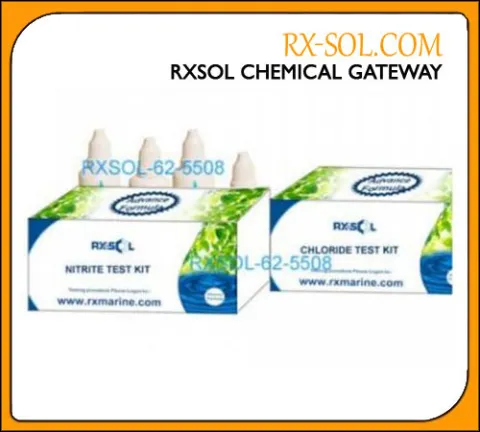
Phosphate Test Kit
- Part number
- RXSOL-62-5520-001
- Category
- Test Kit For Water
- Brand
- RXSOL
Overview
Determination of PHOSPHATE level very Simple way. Phosphate measurement is used to control scale and corrosion inhibitor levels in boilers and cooling towers. Reactive phosphate will give a positive reaction.
Technical specifications
GENERAL TIPS 1 :::--- A small amount of the sample is acidified with Concentrated Nitric Acid to which a little ammonium molybdate is added. The presence of Phosphate Ions is indicated by the formation of a bright yellow layer.
GENERAL TIPS 2 :::--- Standard Phosphorus Solution, 0.1 mg/mL as Phosphorus: Dissolve exactly 0.4395 g (Note 5) of reagent grade potassium dihydrogen phosphate (KH2PO4) in 500 mL of purified water in a 1 L volumetric flask; dilute to volume with purified water and mix thoroughly. Standard Solution: 2 µg Phosphorus per mL:
OTHERWISE :
Standard phosphate solutions: 22.068 mg of anhydrous KH2PO4 was dissolved in distilled water and diluted to 100 mL. Thus, 1mL = 50.3µg PO4 3 --P.
Applications
This is applicable to laboratory analysis particularly in the determination of PHOSPHATE. Such an analytical test may be either qualitative or quantitative.
This test kit reads the total phosphate level in parts per million (ppm), which are equivalent to milligrams per liter (mg/L) from 0 - 50.0 ppm (mg/L).
Testing Procedure :::--- A Quantitative method to determine the amount of phosphate present in samples such as boiler feedwater is as follows
Dosage and directions
REAGENT & APPARATUS:
Reagent: RXSOL TK 10 , TK 11 ( or TK 12 ) . Apparatus : TEST TUBE , Titrator or DROPPER
PROCEDURE for test ( STEP WISE ):
1. Rinse a clean test tube with water being tested.
2.Fill the sample cup to the 2.5 mL mark with the sample to be tested (fig ).
3.Add 20 drops of RXSOL TK 10 solution Activator Solution. Cap the sample cup and shake it to mix the contents well..
4. Now, holding the bottle vertically, add 5 drops from TK 11 ( or TK 12 ) Test Solution . Note: RXSOL TK 12 contains a very thick solution and may require increased pressure to release drops.
5.To mix completely, invert it several times, allowing the bubble to travel from end to end.
6. Wait 2 - 3 minutes for color development.
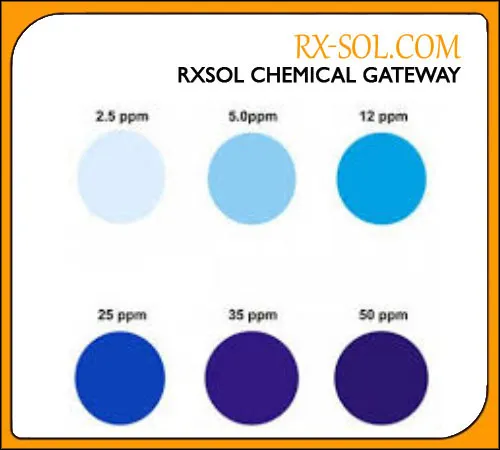
7. Obtain a test result using the appropriate comparator chart, place the glass test jar on colour card & match with various shade of colour .or online www.rxmarine.com/phosphate-test-kit
8. Read the test results by comparing the color of the solution to the appropriate Phosphate Color Card (choose either Freshwater or Saltwater). The tube should be viewed in a well light area against the white area of the card. The closest match indicates the ppm (mg/L) of total phosphate (PO43–) in the water sample. Rinse the test tube with clean water after use.
Other Reagent Required :::
Phenolpthalein indicator Aqueous Solution : Part No.- RXSOL-60-6030-001 ( https://www.rxmarine.com/Phenolphthalein-Indicator-Solution )
Sulfuric acid solution (300 mL conc H2SO4 in 1 L H2O) Part No.- RXSOL-60-6286-500 ( https://www.rxmarine.com/SULPHURIC-ACID-STANDARDIZED-SOLUTION )
One drop (0.05 mL) phenolpthalein was added to 50 mL of sample. If red color developed H2SO4 was added to discharge the color.
Characteristics and notes
Why Test for Phosphate?
Abnormally high levels of phosphate can lead to organ damage due to calcification (calcium phosphate deposits in organs, such as the kidneys).
Phosphate levels are normally higher in young children than in adults because their bones are actively growing. Low phosphate levels in children can inhibit bone growth. Very low levels of phosphate are rare but require swift medical attention.
Soft drinks and pre-packaged food items are high in phosphate content, sometimes as phosphoric acid, which some nutritionists believe contributes to over consumption of phosphorus.
Test results may be affected by the use of enemas and laxatives containing sodium phosphate, excess Vitamin D supplements, and by intravenous glucose administration.
Also effective test for :::
Phosphate (PO43–) enters the aquarium from fish and invertebrate waste and decaying organic matter, such as dead algae and uneaten fish food.
Water treatment facilities may add phosphate to tap water to prevent pipe corrosion and reduce concentrations of heavy metals in drinking water.
Some salt mixes also contain phosphates. Excess phosphate may lead to algae blooms.
In saltwater aquariums, phosphate precipitates dissolved calcium (Ca2+) and magnesium (Mg2+) ions, inhibiting the growth of hard corals and other reefbuilding organisms.
Safety and SDS
Read the safety data sheet before handling. Wear suitable gloves and eye protection.
View safety data sheet
| Product Name | Phosphate Test Kit |
| Part Number | RXSOL-62-5520-001 |
Company Details:
RX MARINE INTERNATIONAL
105, A wing , BSEL , TECH PARK.
VASHI ,NEW BOMBAY 400703 INDIA
| Phone | +91 22 65113333 / 5555 / 9999 / 27611360 |
| Fax | +91 22 2781 1318 :::AOH :0091 9821214367 |
| rxsolchemicals@gmail.com |
Section 1: Identification of the Supplier and Substance/Mixture
The active reagents are the enzyme PNP (purine nucleoside phosphorylase) and the cofactor MESG (7-Methyl-6-thioguanosine).
Assay Buffer: 200 mM HEPES/ 20 mM MgCl2 @ pH 7.6
Phosphate Standard: KH2PO4 (varies by kit)
Pictogram (No Symbol)
Signal word Warning
Hazard Statements
H303 May be harmful if swallowed
Not a hazardous substance or mixture.
Precautionary statements
P235+410 Keep cool.Protect from sunlight.
P301+314+330 If Swallowed: Get medical advice/attention if you feel unwell. Rinse mouth.
P302+352 If on Skin: Wash with soap and water.
P305+351+338 If in Eyes: Rinse cautiously with water for several minutes. Remove contact lenses if present and easy to do – continue rinsing.
Section 3: Composition and Information on Ingredients Substance
Common name, Chemical name, CAS number, Formula: See Table Below
Principal Hazardous Component: Biologic Activity:
Exposure Limits: Not established
Chemical Name CAS Number Chemical Formula
PNP (purine nucleoside phosphorylase) 9030-21-1 Complex Peptide
MESG (7-Methyl-6-thioguanosine) 55727-10-1 C11H15N5O4S
HEPES 7365-45-9 C8H18N2O4S
MgCl2 6H2O (magnesium chloride hexahydrate) 7791-18-6 Cl2Mg 6H2O
Potassium Phosphate, monobasic 7778-77-0 KH2PO4 Deionized water 7732-18-5 H2O
Enzymes/Proteins may cause allergic reactions in certain sensitive individuals. Any chemical may cause skin or eye irritation. Avoid contact with Color Reagent.
Inhalation: Remove affected individual from source, then seek medical attention.
Eyes: Remove contact lenses if present. Flush thoroughly with saline or water. Contact physician if irritation or redness persists.
Skin: Remove contaminated clothing, wash material from skin using soap and water. Contact physician if irritation develops. Clean clothing before
reuse.
Ingestion: May be harmful if swallowed. Obtain medical attention as required.
No special fire fighting equipment, media, or clothing is required.
Auto-ignition temperature: N/A
Flash Point:N/A
Flammable Limits in Air (% by volume): N/A
Unusual fire or Explosion Hazards: N/A
Stability: Degradation products are not hazardous
Wear appropriate protective equipment for storage and when handling. No additional precautions are required.
If Released or Spilled: Wear approved goggles and protective gloves. Collect spilled powders or solids into waste container for disposal. Avoid physical contact during removal, especially any dust. Use normal cleanup procedures for liquid spills. Wash area thoroughly with water. Wash contaminated clothing prior to reuse.
Waste Disposal: Dispose of waste in accordance with all applicable Federal, State, and Local regulations.
Refer to product label for storage conditions. Store lyophilized and freeze-dried proteins in a cool, dry area in tightly closed containers when not in use. Some proteins are temperature-sensitive: store at temperature suggested on label
Handling: Wear appropriate protective equipment; see Section 8. Avoid generation of dust or aerosols
Respiratory Protection: (approved dust mask or respirator) is advisable when handling a powdered form of a product in order to avoid breathing particulates. Wear protective gloves and goggles or safety glasses to prevent direct contact with skin or eyes. Sensitive individuals should wear protective clothing.
Ventilation: Advisable, standard vent fan and local exhaust as required.
Appearance and Odor: Powders, white Solubility in Water: Soluble in water
Stability: Stable, Keep Cool
Hazardous Decomposition Products: None Known
Hazardous Polymerization: Will Not Occur
Acute Overexposure: May cause skin, eye, or respiratory irritation upon contact.
Chronic Overexposure: May cause allergic reactions in certain sensitive individuals. The toxicological properties of this material have not been fully investigated. Always follow Good Laboratory and Industrial Hygiene Practices and wear personal protective equipment when handling chemicals.
Environmental Hazard: None Known.
Dispose of waste in accordance with all Local, State, and Federal regulations. Chemical residues are generally classified as special waste: therefore transportation, storage, treatment, and disposal must be conducted in compliance with all applicable regulations. Rinse empty containers thoroughly before recycling.
Proper Shipping Name: Not regulated
Hazard Class: N/A
Packaging Group: N/A
Reportable Quantity: N/A
Labels Required: N/A
International Transportation Requirements: Not Regulated
UN/NA Code: N/A
US Federal and State: Materials are exempt for the US Environmental Protection Agency Toxic Controlled Substances Control Act (TSCA) inventory. Not known to be listed or regulated under any State jurisdiction.
International: EC: /R42/43, May cause sensitization by inhalation and skin contact. S36, wear suitable, protective clothing
The information provided in this SDS is believed to be correct but does not purport to be all inclusive. The information is presented as a guide. NECi assumes no liability for its accuracy or completeness. NECi does not assume liability for damages resulting from handling, use, and/or disposal of these products.
DISCLAIMER OF LIABILITY :The information in this SDS was obtained from sources which we believe are reliable. However, the information is provided without any warranty, express or implied, regarding its correctness. The conditions or methods of handling, storage, use or disposal of the product are beyond our control and may be beyond our knowledge. For this and other reasons, we do not assume responsibility and expressly disclaim liability for loss, damage or expense arising out of or in any way connected with the handling, storage, use or disposal of the product. This MSDS was prepared and is to be used only for this product. If the product is used as a component in another product, this MSDS information may not be applicable.
Availability
Phosphate Test Kit manufacturer and supplier in Dubai, Sharjah, Ajamn, Fujairah, Abu Dhabi UAE Middle East, Mumbai, Kandla Gandhidham, Surat HAzira, Mundra, Jamnagara, Chennai, Ennore, Visakhapatnam, Kolkata, Haldia, PAradip INDIA, Barka, Sohar, Muscat OMAN