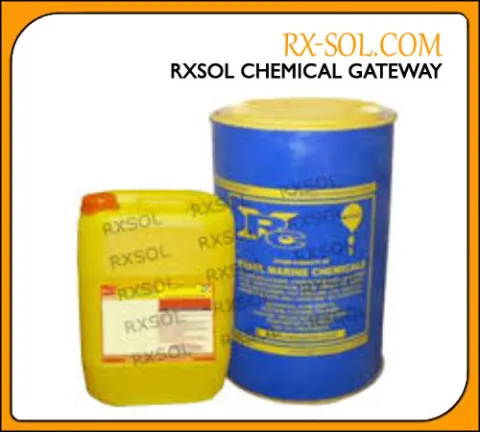
SUPER HYDRO 3X
- Part number
- RXSOL-43-4143-210
- Category
- Cooling Water Chemical
- Brand
- RXSOL
Overview
SUPER HYDRO 3X 3X is a 3 in 1 hydrotest cocktail which functions as a Corrosion Inhibitor Oxygen Scavenger and Biocide
RXSOL Super Hydro 3X is a high-performance, multi-functional chemical treatment designed for use in general hydrotesting and wellbore-related fluid systems such as packer and completion fluids. It is a synergistic blend of corrosion inhibitors, oxygen scavengers and biocides engineered to offer superior protection against oxidative corrosion, CO2-induced pitting, and hydrogen sulfide (H2S)-related sour corrosion, while simultaneously preventing microbiological growth and proliferation.
Technical specifications
| Appearance | : | Liquid |
| Colour | : | Pale Yellow |
| Odour | : | Characteristic |
| Density | : | > 1 |
| Solubility | : | Miscible with water |
Applications
Blend of Corrosion Inhibitor - Oxygen Scavenger - Biocide
RXSOL Super Hydro 3X is suitable for use in:
- Hydrotesting pipelines and pressure vessels
- Completion and packer fluid conditioning
- Temporary preservation of well tubulars and components
- Storage tank corrosion protection
Dosage and directions
| Application | Instructions |
|---|---|
| Hydrotesting | Adjust based on metallurgy and water quality |
| Packer/Completion Fluids | Add directly to the fluid system and mix thoroughly |
| General Compatibility | Compatible with typical oilfield chemicals like scale inhibitors, oxygen scavengers, etc. |
Characteristics and notes
3-IN-1 Hydrotesting COCKTAIL
- Triple-functionality: corrosion inhibition + biocidal action + oxygen scavenging
- Effective against CO2 and H2S-induced corrosion
- Controls aerobic and anaerobic bacterial growth
- Compatible with various brines and seawater
- Film-forming agents create a persistent barrier on metal surfaces
- Contains oxygen scavengers to limit oxidative attack
- Environmentaly acceptable formulation (low toxicity)
- High thermal stability (up to 130°C)
- Prevents microbial-induced corrosion (MIC)
- Fast-acting, long-lasting protection
- Compatible with elastomers and metal alloys typically used in oilfield applications
Safety and SDS
Read the safety data sheet before handling. Wear suitable gloves and eye protection.
View safety data sheet
| Porduct Name | Super Hydro 3X |
| Part Number | RXSOL-43-4143-210 |
Blend of Corrosion Inhibitor - Oxygen Scavenger - Biocide
Company Details:
RX MARINE INTERNATIONAL
105, A wing , BSEL , TECH PARK.
VASHI ,NEW BOMBAY 400703 INDIA
Branch : Kandla, Mumbai , Chennai, Vizag, Kolkata, UAE , OMAN , CANADA and KENYA
| Phone | +91 22 20871200 - 1400 |
| Fax | +91 22 27612100 :::AOH :0091 9821214367 |
| rxsolchemicals@gmail.com | |
| Website | www.rxmraine.com |
| Prouct Name | CAS Number | EC Number | Weight Percentage | Classification according to Regulation (EC) No. 1272/2008 |
| Quaternary Ammonium Compounds, Benzyl C12-C16 Alkyldimethyl Chlorides |
68424-85-1
|
939-253-5 | 10 - 25 |
H302
H314
|
|
Ammonium Hydrogensulphite
|
10192-30-0
|
233-469-7 | 10 – 30 | Eye Irrit. 2, H319 |
|
2-(Methoxymethylethoxy) Propanol
|
34590-94-8
|
252-104-2 | 1 – 10 | Not classified |
|
Methanol
|
67-56-1
|
200-659-6 | 1 - 10 |
Acute Tox. 4 (Oral), H302
|
| Classification according to Regulation (EC) No. 1272/2008 |
Acute toxicity (oral), Category 4 H302
Skin corrosion/irritation, Category 1, Sub-Category 1B H314
Serious eye damage/eye irritation, Category 1 H318
Hazardous to the aquatic environment — Acute Hazard, Category 1 H400
Hazardous to the aquatic environment — Chronic Hazard, Category 2 H411
Full text of H- and EUH-statements: see section 16
|
| Adverse physicochemical, human health and environmental effects |
Harmful if swallowed. Causes severe skin burns and eye damage. Causes serious eye damage. Very toxic to aquatic life. Toxic to aquatic life with long lasting effects.
|
Label elements
| Signal word | Danger |
|
Contains |
Ethane-1,2-diol, methanol, Quaternary ammonium compounds, benzyl C12-C16 (even
numbered)-alkyldimethyl chlorides
|
| Hazard statements |
H302 - Harmful if swallowed.
H314 - Causes severe skin burns and eye damage.
H410 - Very toxic to aquatic life with long lasting effects.
|
|
Precautionary statements |
P264 - Wash hands thoroughly after handling.
P280 - Wear eye protection, protective clothing, protective gloves.
P303+P361+P353+P310 - IF ON SKIN (or hair): Take off immediately all contaminated
clothing. Rinse skin with water/shower.. Immediately call a POISON CENTER or doctor.
P305+P351+P338+P310 - IF IN EYES: Rinse cautiously with water for several minutes.
Remove contact lenses, if present and easy to do. Continue rinsing. Immediately call a
POISON CENTER or doctor.
P321 - Specific treatment (see supplemental first aid instruction on this label).
P391 - Collect spillage.
|
| EUH-statements | EUH031 - Contact with acids liberates toxic gas. |
| Other hazards |
This substance/mixture does not meet the PBT criteria of REACH regulation, annex XIII
This substance/mixture does not meet the vPvB criteria of REACH regulation, annex XIII
|
| General | Call a physician immediately. |
| Iinhalation | Remove person to fresh air and keep comfortable for breathing. |
| Skin contact | Rinse skin with water/shower. Take off immediately all contaminated clothing. Call a physician immediately. |
| Eye contact |
Rinse cautiously with water for several minutes. Remove contact lenses, if present and easy to do. Continue rinsing. Call a physician immediately.
|
| Ingestion | Rinse mouth. Do not induce vomiting. Call a physician immediately. |
Most important symptoms and effects, both acute and delayed
| Symptoms/effects after skin contact | Burns |
| Symptoms/effects after eye contact | Serious damage to eyes |
| Symptoms/effects after ingestion | Burns |
| Suitable extinguishing media | Water spray. Dry powder. Foam. Carbon dioxide. |
| Special hazards arising from the substance or mixture |
Highly flammable liquid and vapor. Runoff to sewer may create fire or explosion hazard. In a fire or if heated, a pressure increase will occur and the container may burst, with the risk of a subsequent explosion. The vapor/gas is heavier than air and will spread along the ground. Vapors may accumulate in low or confined areas or travel a considerable distance to a source of ignition and flash back.
|
| Hazardous decomposition products in case of fire |
Toxic fumes may be released. |
| Advice for firefighters |
Spray to keep fire-exposed containers cool.Promptly isolate the scene by removing all persons from the vicinity of the incident if there is a fire. No action shall be taken involving any personal risk or without suitable training. Move containers from fire area if this can be done without risk. Use water spray to keep fire-exposed containers cool.
|
| Protection during firefighting | Do not attempt to take action without suitable protective equipment. Self-contained breathing apparatus. Complete protective clothing. |
| Emergency procedures | Ventilate spillage area. Avoid contact with skin and eyes. Do not breathe dust/fume/gas/mist/vapours/spray. |
| Protective equipment | Do not attempt to take action without suitable protective equipment. For further information refer to section 8: "Exposure controls/personal protection". |
| Environmental precautions | Avoid release to the environment |
| For containment | Collect spillage |
| Methods for cleaning up | Take up liquid spill into absorbent material |
| Other information | Dispose of materials or solid residues at an authorized site. |
| Reference to other sections | For further information refer to section 13. |
| Precautions for safe handling |
Ensure good ventilation of the work station. Avoid contact with skin and eyes. Do not breathe dust/fume/gas/mist/vapours/spray. Wear personal protective equipment.
|
| Hygiene measures | Wash contaminated clothing before reuse. Do not eat, drink or smoke when using this product. Always wash hands after handling the product. |
| Storage conditions | Store locked up. Store in a well-ventilated place. Keep cool. |
| Specific end use(s) | No additional information available |
| (2-methoxymethylethoxy)propanol (34590-94-8) | |
| EU - Indicative Occupational Exposure Limit (IOEL) | |
| Local name | (2-Methoxymethylethoxy)-propanol |
| IOEL TWA | 308 mg/m³ |
| IOEL TWA [ppm] | 50 ppm |
| Remark | Skin |
(2-Methoxymethylethoxy)propanol (34590-94-8)
| Regulatory reference | COMMISSION DIRECTIVE 2000/39/EC |
| United Kingdom - Occupational Exposure Limits | |
| Local name | (2-Methoxymethylethoxy)-propanol |
| IOEL TWA | 308 mg/m³ |
| IOEL TWA [ppm] (OEL TWA) [2] | 50 ppm |
| Remark | Sk (Can be absorbed through the skin. The assigned substances are those for which there are concerns that dermal absorption will lead to systemic toxicity) |
| Regulatory reference | EH40/2005 (Fourth edition, 2020). HSE |
Ethane-1,2-diol (107-21-1)
| EU - Indicative Occupational Exposure Limit (IOEL) | |
| Local name | Ethylene glycol |
| IOEL TWA | 52 mg/m³ |
| IOEL TWA [ppm] (OEL TWA) [2] | 20 ppm |
| IOEL STEL | 104 mg/m³ |
| IOEL STEL [ppm] | 40 ppm |
| Remark | Skin |
| Regulatory reference | COMMISSION DIRECTIVE 2000/39/EC |
United Kingdom - Occupational Exposure Limits
| Local name | Ethane-1,2-diol |
| WEL TWA (OEL TWA) [1] |
10 mg/m³ particulate
52 mg/m³ vapour
|
| IOEL TWA [ppm] (OEL TWA) [2] | 20 ppm vapour |
| IOEL STEL(OEL STEL) | 104 mg/m³ vapour |
| WEL STEL (OEL STEL) | 40 ppm vapour |
| WEL STEL (OEL STEL) [ppm] | Sk (Can be absorbed through the skin. The assigned substances are those for which there are concerns that dermal absorption will lead to systemic toxicity) |
| Remark | Skin |
| Regulatory reference | EH40/2005 (Fourth edition, 2020). HSE |
Methanol (67-56-1)
| EU - Indicative Occupational Exposure Limit (IOEL | |
| Local name | Methanol |
| IOEL TWA | 260 mg/m³ |
| IOEL TWA [ppm] | 200 ppm |
| Remark | Skin |
| Regulatory reference | COMMISSION DIRECTIVE 2006/15/EC |
Occupational Exposure Limits
| Local name | Methanol |
| WEL TWA (OEL TWA) [1] | 266 mg/m³ |
| WEL TWA (OEL TWA) [2] | 200 ppm |
| WEL STEL (OEL STEL) | 333 mg/m³ |
| WEL STEL (OEL STEL) [ppm] | 250 ppm |
| Remark | Sk (Can be absorbed through the skin. The assigned substances are those for which there are concerns that dermal absorption will lead to systemic toxicity) |
| Regulatory reference | EH40/2005 (Fourth edition, 2020). HSE |
| Recommended monitoring procedures | No additional information available |
| Air contaminants formed | No additional information available |
| DNEL and PNEC | No additional information available |
| Control banding | No additional information available |
Exposure controls
Appropriate engineering controls
| Appropriate engineering controls | Ensure good ventilation of the work station. |
| Safety glasses |
| Type | Field of application | Characteristics | Standard |
| Safety glasses | With side shields | EN 166 |
Skin protection
| Type | Material | Permeation | Thickness (mm) | Penetration | Standard |
| Disposable gloves | Nitrile rubber (NBR), Butyl rubber | 3 (> 60 minutes) |
Nitrile 0.4 mm; Butyl 0.7 mm |
EN ISO 374 |
Respiratory protection
| Device | Filter type | Condition | Standard |
|
Type A - High-boiling (>65 °C)
organic compounds, Filter P
(white)
|
EN 143, EN 14387 |
| Physical state | liquid |
| Colour | Pale yellow. |
| Odor | Characteristic odour |
| Odour threshold | Not available |
| Melting point | Not available |
| Freezing point | Not available |
| Boiling point | Not available |
| Flammability | Not available |
| Explosive limits | Not available |
| Lower explosive limit (LEL) | Not available |
| Upper explosive limit (UEL) | Not available |
| Flash point | 60 – 93 °C |
| Auto-ignition temperature |
Not available
|
| Decomposition temperature | Not available |
| pH | 4 – 6 |
| Viscosity, kinematic | Not available |
| Viscosity, dynemic | < 10 cP 20 °C, S-18 Spindle, 100 RPM |
| Solubility | Not available |
| Partition coefficient n-octanol/water (Log Kow) | Not available |
| Vapour pressure | Not available |
| Vapour pressure at 50 °C | Not available |
| Density | Not available |
| Relative density | Not available |
| Relative vapour density at 20 °C | Not available |
| Particle size | Not applicable |
| Particle size distribution | Not applicable |
| Particle shape | Not applicable |
| Particle aspect ratio | Not applicable |
| Particle aggregation state | Not applicable |
| Particle agglomeration state | Not applicable |
| Particle specific surface area | Not applicable |
| Particle dustiness | Not applicable |
| Information with regard to physical hazard classes | No additional information available |
| Other safety characteristics | No additional information available |
| Reactivity | The product is non-reactive under normal conditions of use, storage and transport. |
| Chemical stability | Stable under normal conditions. |
| Possibility of hazardous reactions | Contact with acids liberates toxic gas. |
| Conditions to avoid | None under recommended storage and handling conditions (see section 7). |
| Incompatible materials |
Acids
|
| Hazardous decomposition products | Under normal conditions of storage and use, hazardous decomposition products should not be produced. |
|
Acute toxicity (oral)
Acute toxicity (dermal)
Acute toxicity (inhalation)
|
Harmful if swallowed.
Not classified
Not classified
|
| SUPER HYDRO 3X | |
| ATE CLP (oral) | |
| Ammonium Hydrogensulphite (10192-30-0) | |
| LD50 dermal rat | > 2000 mg/kg bodyweight Animal: rat, Animal sex: male, Guideline: OECD Guideline 402 (Acute Dermal Toxicity) |
| LC50 Inhalation - Rat |
> 5.5 mg/l air Animal: rat, Animal sex: male, Guideline: OECD Guideline 403 (Acute Inhalation Toxicity)
|
| (2-methoxymethylethoxy)propanol (34590-94-8) | |
| LD50 oral rat | > 5000 mg/kg bodyweight Animal: rat, Guideline: OECD Guideline 401 (Acute Oral Toxicity) |
| LD50 dermal rat | > 19020 mg/kg bodyweight Animal: rat, Guideline: OECD Guideline 402 (Acute Dermal Toxicity) |
| LD50 dermal rabbit | 9510 mg/kg bodyweight Animal: rabbit, Animal sex: male, Guideline: OECD Guideline 402 (Acute Dermal Toxicity) |
| LC50 Inhalation - Rat | > 3000 mg/m³ Source: ECHA |
| Ethane-1,2-diol (107-21-1) | |
| LD50 oral rat | 7712 mg/kg bodyweight Animal: rat |
| LD50 dermal | 3500 mg/kg bodyweight Animal: mouse |
| LC50 Inhalation - Rat | 2500 mg/m |
| Methanol (67-56-1) | |
| LD50 oral rat | 1187 – 2769 mg/kg bodyweight Animal: rat |
| LD50 dermal | 17100 mg/kg bodyweight |
| LC50 Inhalation - Rat | 43700 mg/m³ |
| Quaternary Ammonium Compounds, Benzyl C12-C16 (even numbered)-alkyldimethyl chlorides (68424-85-1) | |
| LD50 oral rat | 795 mg/kg bodyweight |
| LD50 dermal rabbit | 3412.5 mg/kg bodyweight |
| LC50 Inhalation - Rat | 0.22 – 0.28 mg/l/4h |
| Skin corrosion/irritation |
Causes severe skin burns.
pH: 4 – 6. |
| Serious eye damage/irritation |
Causes severe skin burns.
pH: 4 – 6
|
| Respiratory or skin sensitisation | Not classified |
| Germ cell mutagenicity | Not classified |
| Carcinogenicity |
Not classified
|
| Ethane-1,2-diol (107-21-1) | |
| NOAEL (chronic, oral, animal/male, 2 years) | 1500 mg/kg bodyweight Animal: mouse, Animal sex: male, Remarks on results: other:Effect type: carcinogenicity (migrated information) |
| Reproductive toxicity | Not classified |
| methanol (67-56-1) | |
| NOAEL (animal/male, F0/P) |
< 1000 mg/kg bodyweight Animal: mouse, Animal sex: male
|
| STOT-single exposure | Not classified |
| methanol (67-56-1) | |
| STOT-single exposure | Causes damage to organs. |
| STOT-repeated exposure | Not classified |
| (2-methoxymethylethoxy)propanol (34590-94-8) | |
| NOAEL (oral, rat, 90 days) | 1000 mg/kg bodyweight Animal: rat, Guideline: other:KANPOGYO No.700, YAKUHATSU No. 1039.61, and KIKYKU No. 1014 |
| NOAEL (dermal, rat/rabbit, 90 days) | 2850 mg/kg bodyweight Animal: rabbit, Animal sex: male, Guideline: OECD Guideline 411 (Subchronic Dermal Toxicity: 90-Day Study) |
| Ethane-1,2-diol (107-21-1) | |
| STOT-repeated exposure | May cause damage to organs through prolonged or repeated exposure. |
| Aspiration hazard | Not classified |
| Toxicity | NA |
| Ecology - general | Very toxic to aquatic life. Toxic to aquatic life with long lasting effects |
| Hazardous to the aquatic environment, short-term (acute) | Very toxic to aquatic life. |
| Hazardous to the aquatic environment, long-term (chronic) | Toxic to aquatic life with long lasting effects |
Ammonium Hydrogensulphite (10192-30-0)
| LC50 - Fish [1] | 464 – 1000 mg/l Test organisms (species): Danio rerio (previous name: Brachydanio rerio) |
| EC50 - Crustacea [1] | 89 mg/l Test organisms (species): Daphnia magna |
| EC50 - Other aquatic organisms [1] | 74.9 mg/l Freshwater invertebrates |
| EC50 72h - Algae [1] | 43.8 mg/l Test organisms (species): Desmodesmus subspicatus (previous name: Scenedesmus subspicatus) |
| NOEC (chronic) | > 10 mg/l Test organisms (species): Daphnia magna Duration: '21 d' |
| NOEC chronic fish | ≥ 316 mg/l Test organisms (species): Danio rerio (previous name: Brachydanio rerio) Duration: '34 d' |
| NOEC chronic crustacea | 8.41 mg/l Freshwater invertebrates |
| NOEC chronic algae | 28 mg/l Freshwater algae |
| (2-methoxymethylethoxy)propanol (34590-94-8) | |
| LC50 - Fish [1] | > 1000 mg/l Test organisms (species): Poecilia reticulata |
| EC50 - Other aquatic organisms [1] | 1930 mg/l Test organisms (species): other aquatic crustacea:Acartia tonsa |
| EC50 72h - Algae [1] | > 969 mg/l Test organisms (species): Pseudokirchneriella subcapitata (previous names: Raphidocelis subcapitata, Selenastrum capricornutum) |
| EC50 96h - Algae [1] | > 969 mg/l Test organisms (species): Pseudokirchneriella subcapitata (previous names: Raphidocelis subcapitata, Selenastrum capricornutum) |
| LOEC (chronic) | 0.5 mg/l Test organisms (species): Daphnia magna Duration: '22 d' |
| NOEC (chronic) | ≥ 0.5 mg/l Test organisms (species): Daphnia magna Duration: '22 d' |
| Ethane-1,2-diol (107-21-1) | |
| LC50 - Fish [1] | 72860 mg/l Test organisms (species): Pimephales promelas |
| EC50 - Crustacea [1] | > 13900 mg/l Test organisms (species): Daphnia magna |
| EC50 96h - Algae [1] | 3536 mg/l Test organisms (species): other:grenn algae |
| EC50 96h - Algae [2] | 6500 – 13000 mg/l Test organisms (species): Pseudokirchneriella subcapitata (previous names: Raphidocelis subcapitata, Selenastrum capricornutum) |
| NOEC (chronic) | ≥ 1000 mg/l Test organisms (species): Americamysis bahia (previous name: Mysidopsis bahia) Duration: '23 d' |
| NOEC chronic fish | 15380 mg/l |
| NOEC chronic crustacea | > 15000 ml/l |
| Methanol (67-56-1) | |
| LC50 - Fish [1] | 15400 mg/l Test organisms (species): Lepomis macrochirus |
| EC50 - Crustacea [1] | 18620 mg/l Daphnia magna |
| EC50 96h - Algae [1] | ≈ 22000 mg/l Test organisms (species): Pseudokirchneriella subcapitata (previous names: Raphidocelis subcapitata, Selenastrum capricornutum) |
| NOEC (chronic) | 208 mg/l Test organisms (species): Daphnia magna Duration: '21 d' |
| NOEC chronic fish | 450 mg/l |
| NOEC chronic crustacea | 122 mg/l |
| Quaternary ammonium compounds, benzyl C12-C16 (even numbered)-alkyldimethyl chlorides (68424-85-1) | |
| LC50 - Fish [1] | 0.28 mg/l |
| LC50 - Fish [2] | 0.515 mg/l Lepomis macrochirus |
| EC50 - Crustacea [1] | 0.016 mg/l Fresh water |
| EC50 - Crustacea [2] | 0.016 mg/l Fresh water |
| EC50 72h - Algae [1] | 0.016 mg/l Fresh water |
| EC50 72h - Algae [2] | 0.207 mg/l Marine water |
| EC50 96h - Algae [1] | 0.049 mg/l |
| NOEC chronic fish | 0.0322 mg/l |
| NOEC chronic crustacea | 0.0048 mg/l |
| NOEC chronic algae | 0.009 mg/l Freshwater |
Persistence and degradability
| (2-methoxymethylethoxy)propanol (34590-94-8) | |
| Biodegradation | 100 % Readily biodegradable |
| Ethane-1,2-diol (107-21-1) | |
| Biodegradation | 100 % Readily biodegradable |
| Bioaccumulative potential | |
| Ammonium hydrogensulphite (10192-30-0) | |
| Bioaccumulative potential | No bioaccumulation data available |
| (2-methoxymethylethoxy)propanol (34590-94-8) | |
| Partition coefficient n-octanol/water (Log Pow) | 0.004 |
| Bioaccumulative potential | Not established. |
| Ethane-1,2-diol (107-21-1) | |
| Partition coefficient n-octanol/water (Log Pow) | -1.36 |
| Bioaccumulative potentia | No bioaccumulation potential. |
| Methanol (67-56-1) | |
| Partition coefficient n-octanol/water (Log Pow) | -0.77 Source: HSDB,CHemIDplus |
| Mobility in soil | |
| (2-methoxymethylethoxy)propanol (34590-94-8) | |
| Surface tension | 68.7 mN/m |
| Ethane-1,2-diol (107-21-1) | |
| Mobility in soil | 0.2 Source: HSDB |
| Methanol (67-56-1) | |
| Mobility in soil | 2.75 Source: HSDB |
| Results of PBT and vPvB assessment | |
| HYDRO 3X | This substance/mixture does not meet the PBT criteria of REACH regulation, annex XIII |
| This substance/mixture does not meet the PBT criteria of REACH regulation, annex XIII | |
| Component | |
| Quaternary ammonium compounds, benzyl C12-C16 (even numbered)-alkyldimethyl chlorides (68424-85-1) |
This substance/mixture does not meet the PBT criteria of REACH regulation, annex XIII
This substance/mixture does not meet the vPvB criteria of REACH regulation, annex XIII
|
| ammonium hydrogensulphite (10192-30-0) |
This substance/mixture does not meet the PBT criteria of REACH regulation, annex XIII
This substance/mixture does not meet the vPvB criteria of REACH regulation, annex XIII
|
| (2-methoxymethylethoxy)propanol (34590-94-8) |
This substance/mixture does not meet the PBT criteria of REACH regulation, annex XIII
This substance/mixture does not meet the vPvB criteria of REACH regulation, annex XIII
|
| methanol (67-56-1) |
This substance/mixture does not meet the PBT criteria of REACH regulation, annex XIII
This substance/mixture does not meet the vPvB criteria of REACH regulation, annex XIII
|
| ethane-1,2-diol (107-21-1) |
This substance/mixture does not meet the PBT criteria of REACH regulation, annex XIII
This substance/mixture does not meet the vPvB criteria of REACH regulation, annex XIII
|
| Endocrine disrupting properties | No additional information available |
| Other adverse effects | No additional information available |
| Waste treatment Method | Dispose of contents/container in accordance with licensed collector’s sorting instructions. |
In accordance with ADR / IMDG / IATA / ADN / RID
| ADR | IMDG | IATA | ADN | RID |
| UN number or ID number | ||||
| UN 3265 | UN 3265 | UN 3265 | UN 3265 | UN 3265 |
| UN proper shipping name | ||||
|
CORROSIVE LIQUID,
ACIDIC, ORGANIC, N.O.S.
(CONTAINS : Quaternary
ammonium compounds,
benzyl C12-C16 (even
numbered)-alkyldimethyl
chlorides)
|
CORROSIVE LIQUID,
ACIDIC, ORGANIC, N.O.S.
(CONTAINS : Quaternary
ammonium compounds,
benzyl C12-C16 (even
numbered)-alkyldimethyl
chlorides)
|
CORROSIVE LIQUID,
ACIDIC, ORGANIC, N.O.S.
(CONTAINS : Quaternary
ammonium compounds,
benzyl C12-C16 (even
numbered)-alkyldimethyl
chlorides)
|
CORROSIVE LIQUID,
ACIDIC, ORGANIC, N.O.S.
(CONTAINS : Quaternary
ammonium compounds,
benzyl C12-C16 (even
numbered)-alkyldimethyl
chlorides)
|
CORROSIVE LIQUID,
ACIDIC, ORGANIC, N.O.S.
(CONTAINS : Quaternary
ammonium compounds,
benzyl C12-C16 (even
numbered)-alkyldimethyl
chlorides)
|
| Transport document description | ||||
|
UN 3265 CORROSIVE
LIQUID, ACIDIC,
ORGANIC, N.O.S.
(CONTAINS : Quaternary
ammonium compounds,
benzyl C12-C16 (even
numbered)-alkyldimethyl
chlorides), 8, II, (E),
ENVIRONMENTALLY
HAZARDOUS
|
UN 3265 CORROSIVE
LIQUID, ACIDIC,
ORGANIC, N.O.S.
(CONTAINS : Quaternary
ammonium compounds,
benzyl C12-C16 (even
numbered)-alkyldimethyl
chlorides), 8, II, (E),
ENVIRONMENTALLY
HAZARDOUS
|
UN 3265 CORROSIVE
LIQUID, ACIDIC,
|